
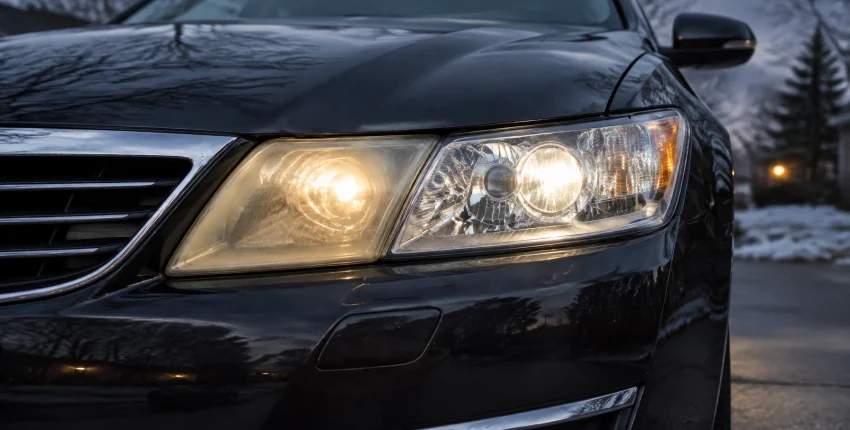
You turn on your headlights for the drive home, but the road ahead still seems dim. Maybe the lenses look yellow or cloudy, too. It’s easy to think of that haze as a cosmetic issue, but headlight lenses help direct light where you need it, so deterioration can affect what you see and how visible your car is to others.
That matters especially when early sunsets, wet pavement, and longer stretches of darkness make a clear view more important. Here’s why headlight lenses cloud, what warning signs to look for, and when a simple cleanup isn’t enough.
Why do headlight lenses turn cloudy?
Most modern headlight covers are made from polycarbonate, a tough plastic that’s lighter and more impact-resistant than glass. The material is typically protected by a thin coating designed to help it withstand ultraviolet (UV) light and everyday wear.
Over time, sun exposure, road grit, and regular weathering can wear down that protective layer. The plastic underneath may then oxidize, leaving the lens yellowed, hazy, or rough. The haze can scatter light rather than allowing it to pass through the lens clearly and in the intended direction.
A cloudy lens isn’t the same as a dirty one. Road grime on the outside may wash away, but oxidation changes the lens surface. Cleaning the headlight can help you tell the difference, but it won’t reverse damage to the protective coating.
AAA’s headlamp lens deterioration research found that the deteriorated lamps it tested produced substantially less low-beam output than new OEM assemblies. Results vary by lamp and condition, but the takeaway is straightforward: a lens that looks badly hazed may also be interfering with useful light.
Signs your headlights need attention
A quick look at your headlights can reveal clues, but pay attention to how they work on the road as well. Common warning signs include:
- Yellowing or haze on the lens: A cloudy, dull appearance may point to exterior oxidation.
- Dim or scattered light: Your headlights seem weaker, or the beam looks less focused than before.
- Moisture inside the housing: Occasional light condensation may clear, but persistent fogging or visible water droplets can suggest a seal or housing problem.
- Flickering: This often points to a bulb, connection, or electrical issue rather than lens oxidation alone.
- Uneven or misaimed beams: One headlight appears higher, lower, or noticeably different from the other.
These symptoms can overlap. For example, an oxidized lens can reduce light transmission, while a failing bulb or electrical connection can also make a headlight dim. If the light output has changed suddenly, or one lamp flickers or goes out, don’t assume polishing the lens will solve it.
Safe checks you can do at home
Start with a simple visual check while the vehicle is parked safely and the lights are off. Look for yellowing, cracks, peeling, or moisture inside the housing. If the surface is dirty, clean it with car-safe soap and water, then inspect it again once it’s dry. A little cleanup can show whether grime was hiding the lens condition, but it won’t repair oxidation.
You can also turn on the headlights and look at the beams from a safe position in front of the vehicle. Avoid staring directly into the lights. If the beams look uneven or one seems to point much higher or lower, have the aim checked rather than trying to adjust it by guesswork.
If you’re comfortable checking the bulbs, follow your owner’s manual. Switch the lights off first and avoid touching the glass of a halogen bulb with bare fingers. Do not reach into wiring or connectors if you’re unsure how to do so safely: an inspection by a technician is a better option.
One caution: sanding or polishing a lens without the right process can remove the remaining protective layer and leave the plastic exposed. Household abrasives or an unsuitable coating may also damage the surface or leave the lens clear only temporarily. If the haze is significant, ask a professional whether restoration is appropriate.
Restoration or replacement: what fixes the problem?
When oxidation is limited to the outside of an otherwise intact lens, restoration may be an option. The process generally involves preparing the surface, removing the degraded layer, polishing the lens, and applying a suitable UV-resistant protective coating. The protective finish matters: polishing alone may improve clarity, but it leaves the surface vulnerable to weathering again.

Restoration is not the right answer for every headlight. A cracked housing, deep damage, persistent internal moisture, or a lens that remains cloudy after treatment may call for replacement or further repair. A technician can also check whether a dim light is caused by a bulb, wiring connection, or another issue instead of, or in addition to, the lens.
Aim is another part of the picture. A clear headlight can still be unsafe if its beam points in the wrong direction. A mechanic can inspect the beam pattern and aim as needed, helping address poor visibility without creating unnecessary glare for oncoming drivers.
Why clear headlights matter during the cold season
Cold weather doesn’t cause UV oxidation by itself, but winter driving can make existing headlight problems harder to ignore. Early sunsets mean more commutes happen in darkness, and wet pavement, slush, or snow can make it more difficult to see lane markings and road edges. Dirt and salt can also build up on the front of your vehicle, so clean lenses matter throughout the season.
If your headlights are badly clouded or have become unreliable, limit night driving when you can and arrange an inspection. If a light suddenly fails, flickers, or produces a severely scattered beam, don’t count on lens polishing to address a potentially electrical or alignment-related problem.
A headlight check fits naturally into your regular car maintenance services, especially before you’re relying on your lights for dark commutes. You can also review cold-weather vehicle preparation tips as part of getting your car ready for the season.
Get your headlights checked in Madison, WI
Hazy headlights can be more than an appearance concern. Oxidation may reduce useful light, while moisture, electrical faults, or misaligned beams can create separate problems that need a closer look. The right fix depends on what’s causing the change and whether the lens can be restored safely.
Penguin Auto Care offers headlight restoration and repair as part of its broader auto repair services in Madison, WI. If you’re looking for a mechanic in Madison, WI to assess dim or cloudy headlights, our team can help determine what needs attention. Book a headlight check and make sure your lights are ready for the next dark drive.